Eating on Virta: Meal planning with the Virta Plate




Key Takeaways
- Creating satisfying low-carb meals is simple with the Virta Plate formula: moderate protein, 1–2 non-starchy vegetables, healthy fats, and your favorite seasonings.
- Virta members’ typical meals use low-carb staples that are affordable and easy to prepare, like eggs, chicken, beef, cheese, and vegetables like leafy greens and broccoli.
- Every Virta member works with their care team to customize a food plan that suits their lifestyle, food preferences, and health goals, with no calorie counting or strict rules.
If you’ve tried a diet program before, this might be a familiar story: you’re given a bunch of rules about what you’re supposed to eat, but when you get to the grocery store or stare into your fridge, you’re on your own. Putting together an actual meal without breaking those rules, without any support, feels overwhelming.
We get it. At Virta, we hear questions all the time like, “Can I be vegetarian?'', “Is it OK if I don't like to cook?”, or “What if I have food allergies?” And our response is always the same—yes, Virta can work for anyone with any type of dietary preferences.
Here’s how we do it. When you join Virta, your care team works with you on a food plan that’s realistic, enjoyable, and sustainable for your life. The Virta Plate is a flexible template you can apply to any cuisine or food preference, whether you’re eating at home or enjoying a restaurant meal.
Let's break down the Virta Plate formula and show what it looks like in real life with a 1-week meal plan based on what our members actually eat.
What’s a typical meal on Virta?
The basic template for a Virta-friendly meal is:
- 1–2 servings of protein
- Virta members consistently choose chicken, beef, cheese, eggs, pork, turkey, tofu, fish, nuts, sausage, and deli meat.
- 1–2 servings of non-starchy vegetables
- Our community loves broccoli, zucchini, celery, leafy greens, cauliflower, green beans, peppers, mushrooms, brussels sprouts, cucumber, and asparagus.
- 1 serving of healthy fats
- Our favorite fats include cream, butter, mayonnaise, olive oil, sour cream, coconut oil, salad dressing, cream cheese, and avocado oil.
- Seasonings and extras to taste
- Members spice up their dishes with salt and pepper, garlic, hot sauce, sriracha, soy sauce, mustard, pesto, fresh or dried herbs, spices, and fresh lemon or lime juice.
Think of this list as inspiration or building blocks, rather than an exhaustive list. The goal is to take out the guesswork out of your meals, but still give you flexibility and variety.
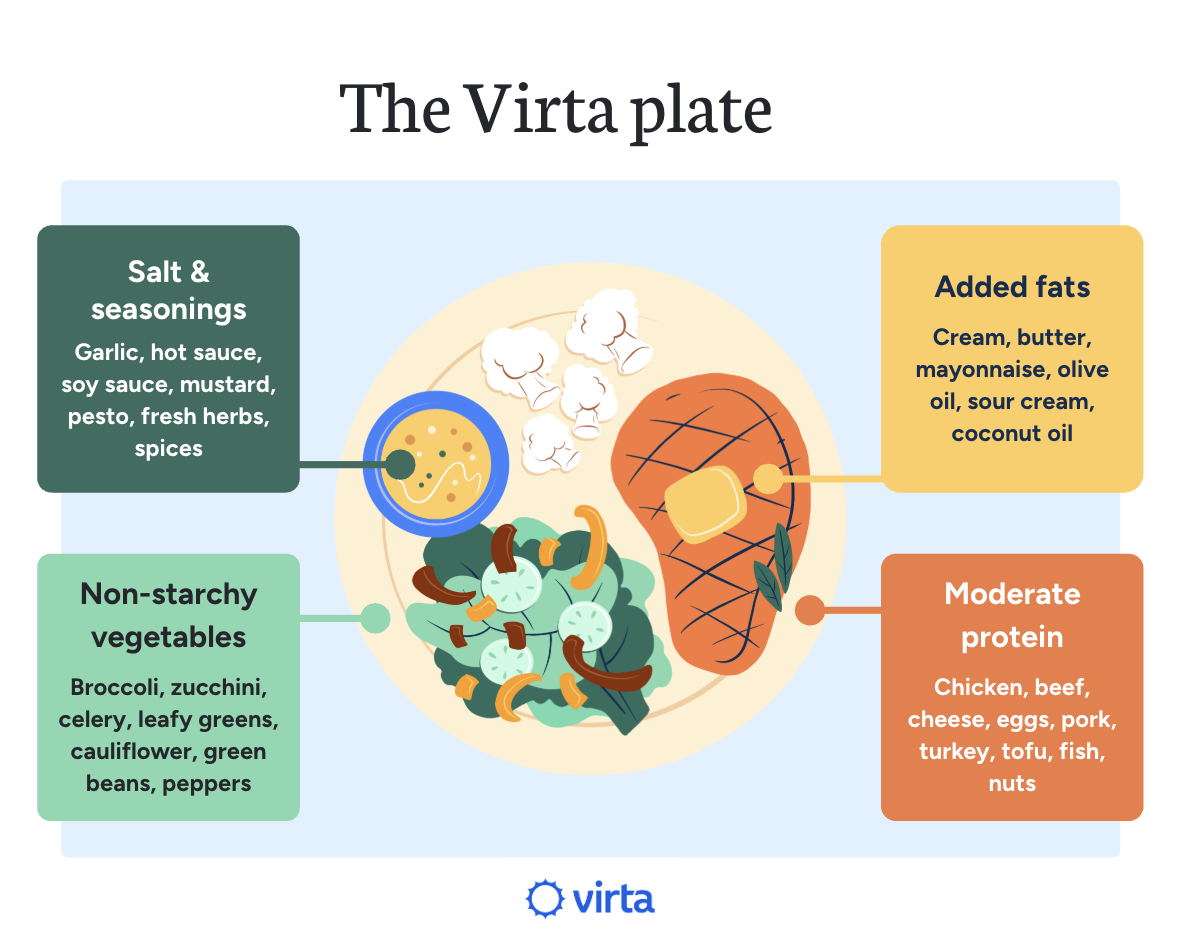
Essentially, the Virta Plate combines moderate protein, healthy fats, and at least one portion of non-starchy vegetables, while keeping carbohydrates low.
We know, low carb can sound like a bummer at first—but it doesn’t have to be restrictive or boring. Along with fats for richness and flavor, you can use salt, spices, and low-carb condiments liberally to make your meals taste and satisfy like your familiar favorites. (If you choose pre-made condiments like sauces and dressings, just look for versions that are low-carb, with no added sugar.)
What’s a serving size of food?
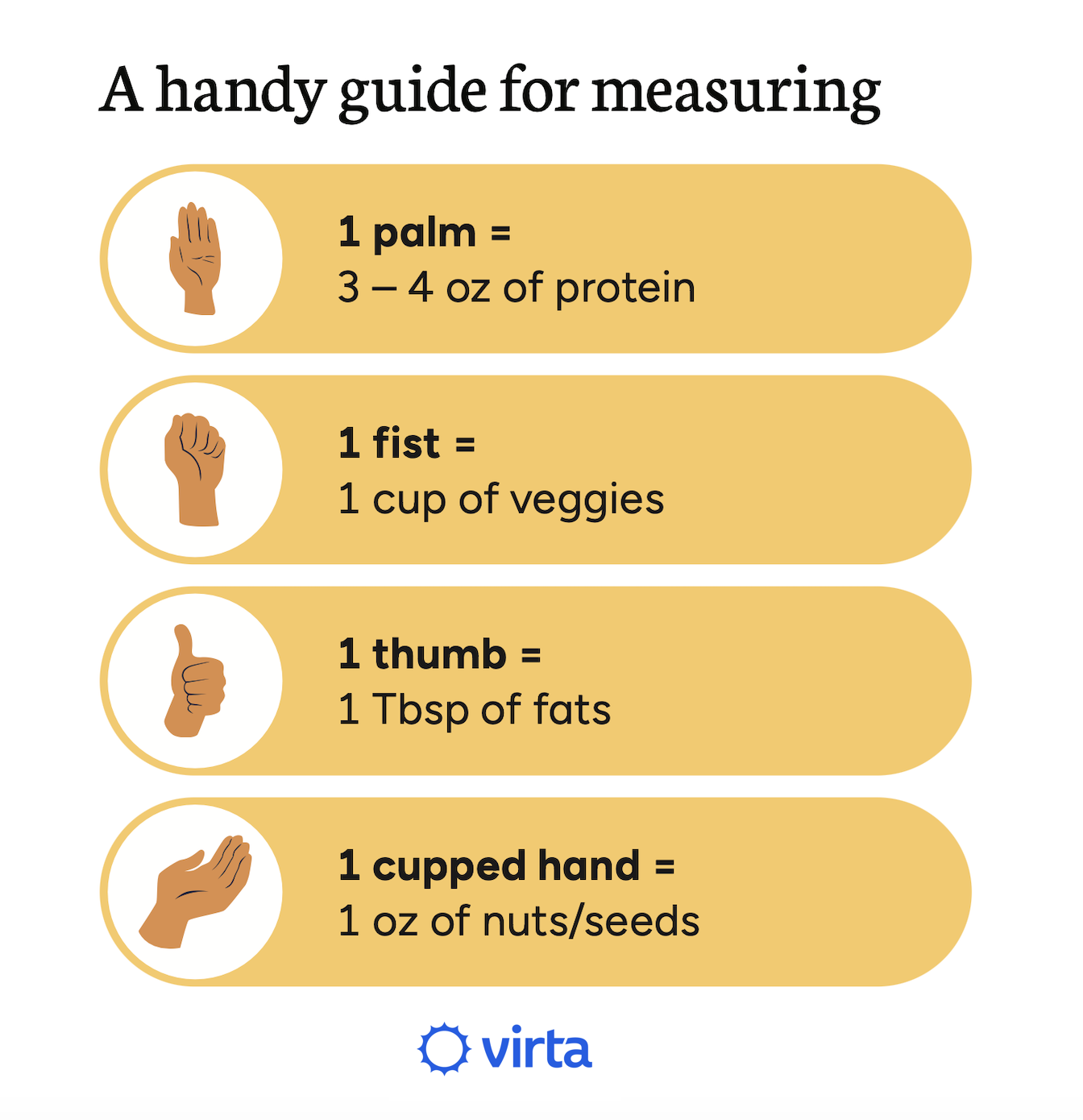
When we talk about a “serving” of food, here’s what those portion sizes should actually look like:
- Protein: 3–4 oz (about the size of your palm)
- Vegetables: 1 cup (about the size of your fist)
- Fats: 1 tablespoon (about the size of your thumb)
- Nuts or seeds: 1 oz (a small handful)
Sample 1-week Virta meal plan
Now that you have a basic understanding of all the elements of a Virta Plate, it’s time to meal plan.
Our community excels at prepping easy meals with affordable ingredients (including leftovers), proving that you don’t need advanced cooking skills to make Virta work for you.
This practical meal plan shows just a sampling of the many different ways you can mix up the Virta Plate, based on real meals and snacks logged by over 15,000 Virta members in a typical week.1
Day 1
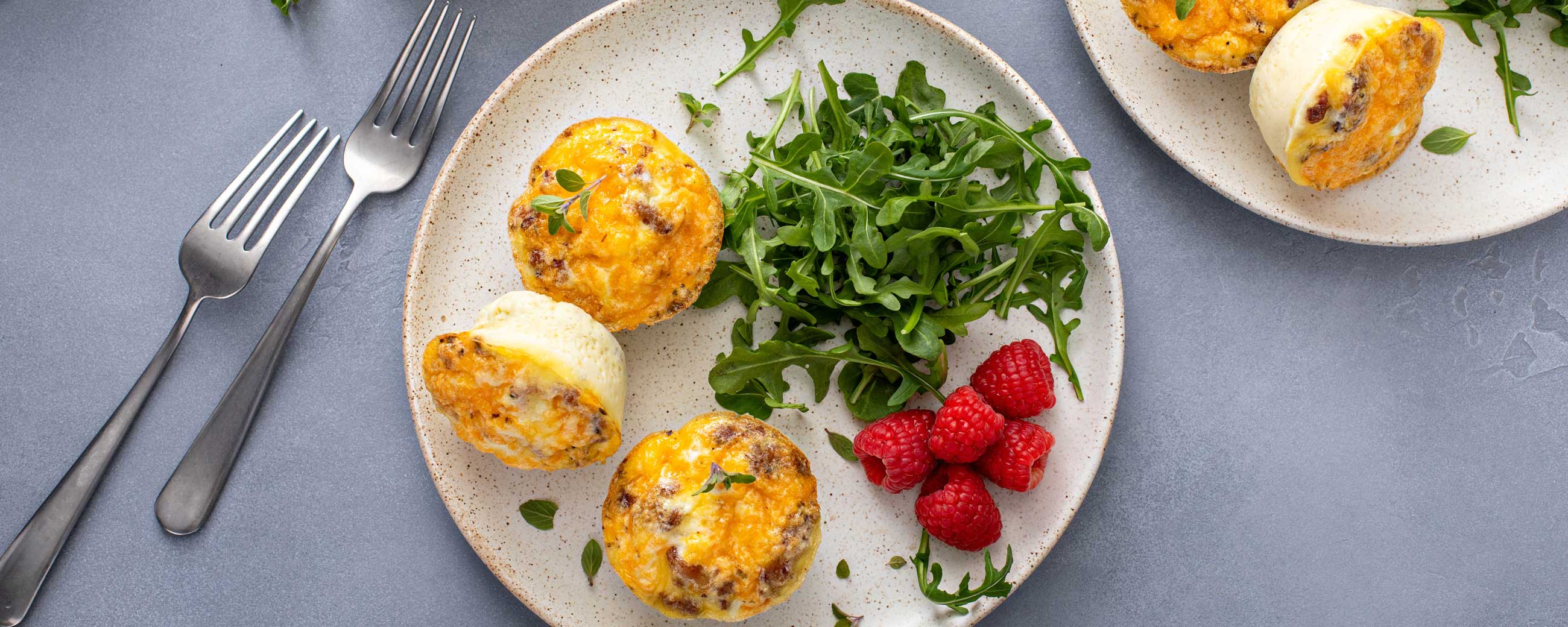
💡 Real member tip: An egg packs about 6g of protein, making it a great ingredient for inexpensive, low-carb breakfasts and snacks. In a sample week, about 15% of all Virta members’ meals and snacks include eggs.1
Day 2
💡 Real member tip: Chicken is the #1 protein Virta members eat most often,1 and bone-in chicken is among the least expensive meats you can buy to add protein to your meals.
Day 3
💡 Real member tip: Rotisserie chickens are a grocery store staple for quick and easy dinners, and you can shred the extra meat to top a salad the next day.
Day 4
💡 Real member tip: Portable meat and cheese snacks, like jerky sticks and string cheese, are Virta members’ go-to high protein, low-carb snacks.1
Day 5
💡 Real member tip: Broccoli is one of our members’ most-eaten vegetables in a given week—easy to roast or air-fry until crispy, or steam in the microwave.1 Try it sprinkled with toasted nuts and parmesan cheese for a boost of protein.
Day 6
💡 Real member tip: Cauliflower rice is a great low-carb swap for white rice, especially dressed up with butter or a sauce of your choice for extra richness and flavor. If you love Asian flavors, you can even turn it into low-carb fried rice.
Day 7
💡 Real member tip: Although meals like stuffed peppers and chicken drumsticks can be prepared simply, you can always kick it up a notch with our recipes for these and other comforting favorites, like: buffalo chicken stuffed peppers, roast chicken, slow-cooker chili, fried pork chops, and chicken pot pie.
Are there foods I can’t eat on Virta?
With Virta the goal is progress, not perfection—so we don’t put harsh restrictions on what you eat. Instead, your care team helps you understand how your body responds to food and find a balance that incorporates the foods you love while still working toward your health goals. Every person has a different level of carb tolerance, so we work with you on meal planning for your specific body and metabolism rather than cutting out certain foods entirely.
That said, if you’re eating to lose weight or if you have type 2 diabetes, it’s most important to limit high-carb foods, which spike your blood sugar and cause your body to store more fat. In particular, you should aim to cut down on processed carbs, like white bread, crackers, and baked goods.
Some other foods that are nutrient-dense are also high in carbs, making them less beneficial for people with type 2 diabetes and other metabolic conditions. If you’re trying to lose weight or treat diabetes, we recommend eliminating these foods or eating them sparingly:
- Starchy vegetables (like sweet potatoes, corn, and squash)
- Beans
- Whole grains (like brown rice, quinoa, and oats)
- Fruits that are higher in carbs (non-berry fruits like apples, bananas, pears, and grapes)
Overall, we recommend that you try to replace processed foods in your diet with whole foods as much as possible. That way, you know exactly what you’re eating and can avoid sneaky sugars and carbs that are hidden in many packaged foods.
What are the benefits of Virta’s dietary approach?
Our evidence-based nutrition program is designed to work for your daily life and build lasting healthy habits. Studies show that after completing 1 year on Virta’s nutrition program, our members have:
- Lost 13% of their body weight in 1 year (that’s about 26lbs for a 200lb adult)2
- Reduced their risk of death, heart attack, or stroke by 56%2
- Eliminated 63% of diabetes prescriptions, with 60% eliminating all their diabetes medications (excluding metformin) at 1 year3
- Felt more energetic4 and started sleeping better5
The Virta Plate is based on these years of research into how nutrition addresses the root cause of weight gain and type 2 diabetes. So you could say we’ve got healthy eating down to a science—literally.
The bottom line
Getting told to “eat better” isn’t enough if you don’t know how to apply that day to day, or if your diet has so many rules that it keeps you from enjoying your life.
Virta gives you the tools to build easy, affordable meals that taste good, are good for your body, and let you live your life. Think custom grocery lists, recipes, video tutorials, personalized meal plans—even a tool in the app that lets you snap a photo of a plate or nutrition label for a full breakdown of how that food will work for you (or what to try instead).
Join Virta to start making a food plan that follows your rules, not the other way around.
Virta meal planning FAQ
Is the Virta diet the same as keto?
Virta’s nutrition approach has similarities to a ketogenic diet, but there are key differences:
With Virta, the primary goal is to help you adjust what you eat so your body starts burning fat for fuel instead of carbohydrates. That means eating more protein and fats, and lowering your carb intake. However, nutrition guidance isn’t one size fits all, so a Virta medical provider monitors your health data in real time to recommend the right balance of protein, fats, and carbs that works for you personally.
Do I have to count calories on Virta?
No, Virta doesn’t ask you to count calories or fast. Instead, you’ll focus on eating nutrient-dense foods that keep you fuller, longer. Virta members enjoy plenty of foods that are high in calories (like nuts, cheese, and cream) as part of a medically supervised, balanced diet. The idea is to eat smarter—not eat less.
Does a low-carb meal plan like Virta work if I’m vegetarian or vegan?
Yes, Virta works for vegetarians and vegans. In fact, nearly 1/4 of Virta members follow specific dietary guidelines like dairy-free, vegetarian, vegan, halal, or kosher. We’re happy to support all different diets, and your Virta care team will help personalize your plan to your needs.
Can I still eat at restaurants if I join Virta?
Yes, you can definitely still go out to eat as a Virta member. Look at the menu ahead of time if you can to identify dishes that follow the general Virta Plate formula of protein + veggies + healthy fats.
Some examples of low-carb, Virta-friendly orders at different types of restaurants:
- Mexican: taco salad, fajitas without the tortillas
- Greek/Middle Eastern: meat kebabs, grilled vegetables, tzatziki
- Japanese: sashimi, seaweed salad, miso soup
- Chinese: beef and broccoli, braised pork belly, moo goo gai pan
- Indian: saag paneer, tandoori chicken, cream-based curries (e.g., chicken korma)
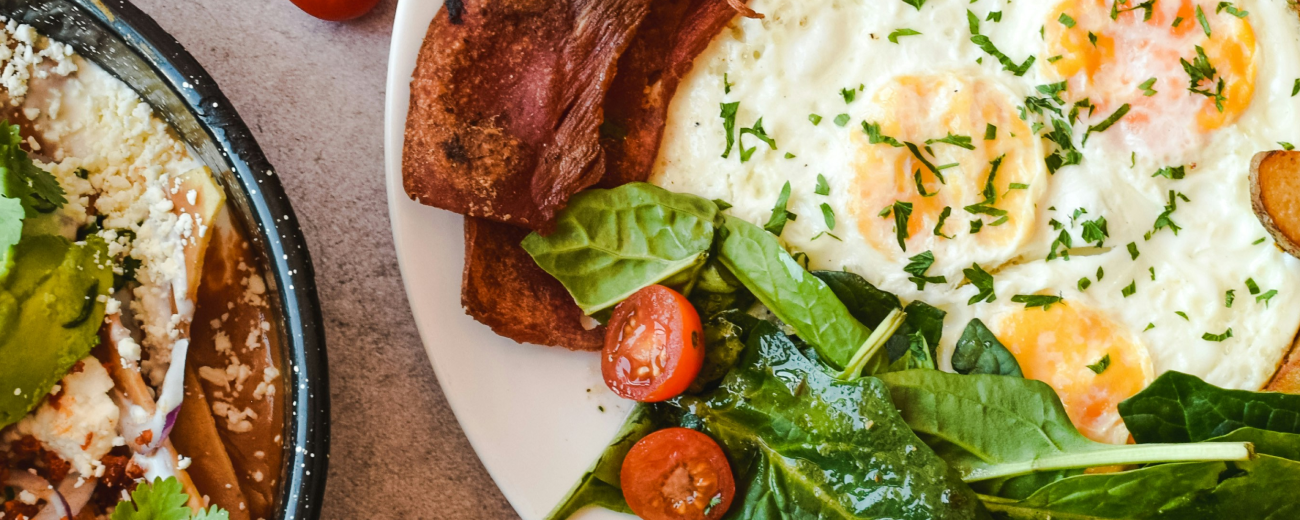
- American: steak and eggs, cheeseburger or grilled chicken in a lettuce wrap
What can I cook for my family if I’m the only one on Virta?
If you’re eating low-carb but your family isn’t, you can cook assembly-style meals, so each person in the family can mix and match their own plate. For example:
- Any protein served with vegetable sides or atop a salad (toppings like cheese, bacon, and creamy dressing are encouraged!)
- Taco bar, where you might make yours a taco salad and skip the tortilla or shell
- Burger night, with a lettuce wrap for yourself instead of a bun
Some family favorites are also easy to adjust by substituting extra vegetables for carbs. Think meat-and-veggie stir fry served over cauliflower rice, or putting your favorite pasta toppings and sauce over zucchini noodles or spaghetti squash.
This blog is intended for informational purposes only and is not meant to be a substitute for professional medical advice, diagnosis, or treatment. Always seek the advice of your physician or other qualified health provider with any questions you may have regarding a medical condition or any advice relating to your health. View full disclaimer
Are you living with type 2 diabetes, prediabetes, or unwanted weight?

- Food logs from all Virta members from the weeks of September 14–20 and October 5–11, 2026.
- Nutrients (2021): “Type 2 Diabetes Prevention Focused on Normalization of Glycemia: A Two-Year Pilot Study.”
- Hallberg SJ, McKenzie AL, Williams P, et al. Effectiveness and Safety of a Novel Care Model for the Management of Type 2 Diabetes at One Year: An Open Label, Non-Randomized, Controlled Study. Diabetes Ther. 2018. DOI: 10.1007/s13300-018-0373-9. Medication and weight-loss is for people living with type 2 diabetes and completing 1 year. Medication reduction refers to the percent of total diabetes prescriptions eliminated, excluding metformin.
- Virta Health. (2025). Annual report on metabolic disease reversal. https://www.virtahealth.com/reversal-report-2025. Analysis based on aggregated, de-identified data from Virta’s real-world member population, derived from over 200,000 members enrolled across Virta’s programs between 2015 and 2025.
- Sleep Medicine (2019): “Effect of a Continuous Care Intervention on Sleep Quality in Adults with Type 2 Diabetes.”