
Avoiding the Nutrition Blindspot: GLP-1s and Weight Loss



Key Takeaways
- Taking GLP-1s alone without nutrition support and medical supervision carries risks. Suppressed appetite may result in inadequate nutrition intake and unintended side effects, like potential muscle and bone mass loss, that could end up impacting overall health–and employers risk trading one health problem for another.
- Studies also show that patients tend to regain their weight within two years after discontinuing GLP-1s without the right support. Alongside a GLP-1, nutrition optimizes impact and supports optimal health. After GLP-1s, a personalized nutrition plan plays an important role in regulating the body’s metabolism to prevent weight regain.
- GLP-1s aren’t a magic pill and need to be paired with nutritional therapy to restore metabolic health, achieve sustainable weight loss, and maintain long-term health outcomes.
GLP-1s may be changing the weight loss conversation, but without nutrition support, employers could be missing a critical piece of the solution. GLP-1s can help in a person’s weight-loss journey, but they aren’t a standalone weight-loss strategy. Because these medications suppress appetite, personalized nutrition therapy, behavior change support, and medical oversight are important to help people meet their nutritional needs, minimize muscle loss, manage side effects, and build habits that support better metabolic health and more sustainable outcomes.
Here are key employer questions that I’m seeing emerging around GLP-1s:
- For employers who have elected to cover GLP-1s, many are going one step further and asking, “How can I better support members on GLP-1s?”
- And employers who have opted out of GLP-1 coverage are wondering, “What are alternative weight loss programs with similar outcomes?”
As a nutrition scientist and Director of Coaching at Virta Health, I’m a huge proponent of personalized, nutrition-based counseling and behavior-change coaching alongside GLP-1s, after GLP-1s, or as an equally effective alternative without GLP-1s. Let me explain why.
Why does nutrition matter when taking GLP-1s?
GLP-1s effectively suppress a person’s appetite and reduce caloric intake by 16-39%1, which is highly effective for weight loss. But without the right nutrition support, eating significantly less may also lead to inadequate protein and micronutrient intake and increase the risk of muscle and bone loss. Delayed gastric emptying and gastrointestinal side effects can make it even harder for some people to meet their nutritional needs, creating potential health consequences if these risks are not properly monitored and addressed.
Recent observational studies2 have identified inadequate nutrient intake or nutritional deficiencies among some GLP-1 users, including calcium, vitamin D, iron, and protein. These nutritional gaps may affect the health of members in several ways:
- Inadequate protein intake can make it harder to preserve muscle during weight loss, while insufficient calcium and vitamin D can negatively affect bone health.2
- Evidence suggests that lean body mass, including muscle, can constitute up to 40% of total weight lost3 during GLP-1 treatment.
- Losing muscle and bone mass can put members at risk for osteoporosis, especially for post-menopausal women.2 Muscle loss can also contribute to reduced strength, frailty, and fall risk.
- Iron deficiency can lead to anemia.2
In short, letting your members take GLP-1s alone could lead employers to simply replace one set of health problems for another.
With reduced overall calorie intake, every calorie counts
When appetite is lower or side effects like nausea make eating more difficult, every bite matters. Prioritizing nutrient-dense foods, including protein-rich foods and vegetables, can help people meet their nutritional needs. Staying hydrated and doing regular strength training also support overall health and help preserve muscle. But it’s not enough to simply tell your members to “eat healthy.” Generic weight-loss recommendations have been around for decades but haven’t worked. Why? Because each member is unique, and each member’s body reacts to foods differently. That’s why members need a personalized nutrition plan that’s constantly monitored and adjusted to optimize the impact of the GLP-1 medication - without compromising their overall health.
How does nutrition regulate the body’s metabolism to sustain weight loss post-GLP-1s or without GLP-1s?
Metabolism is the body’s process of converting food into energy to fuel everything you do, but not all foods impact how the body stores fat or burns calories equally. A personalized nutrition approach that prioritizes protein, healthy fats, and non-starchy vegetables while limiting sugar and refined carbohydrates can help people feel satisfied, preserve muscle, and improve their metabolic health. These habits can support long-term weight management with or without GLP-1s.
As a nutrition scientist, I often say food quality, not quantity, matters for weight loss.
- For example, studies4 show that carbohydrates like white bread or cookies digest quickly and flood glucose into your bloodstream, raising insulin hormone levels. More insulin tells your body to store fat rather than burn it and ultimately stimulates hunger.
- In contrast, protein digests more slowly, burns more calories in the process, and is converted into amino acids to build or repair muscles and tissue. Protein also naturally triggers fullness hormones in the brain, so you don’t overeat.
- Healthy fats from foods such as avocados, olives, nuts, seeds, and fatty fish provide essential fatty acids and help the body absorb important vitamins. They can make smaller meals more nutrient-dense, which is especially valuable when a GLP-1 reduces appetite. However, large amounts of fat, particularly from fried or greasy foods, may worsen nausea or uncomfortable fullness for some people taking GLP-1 medications.
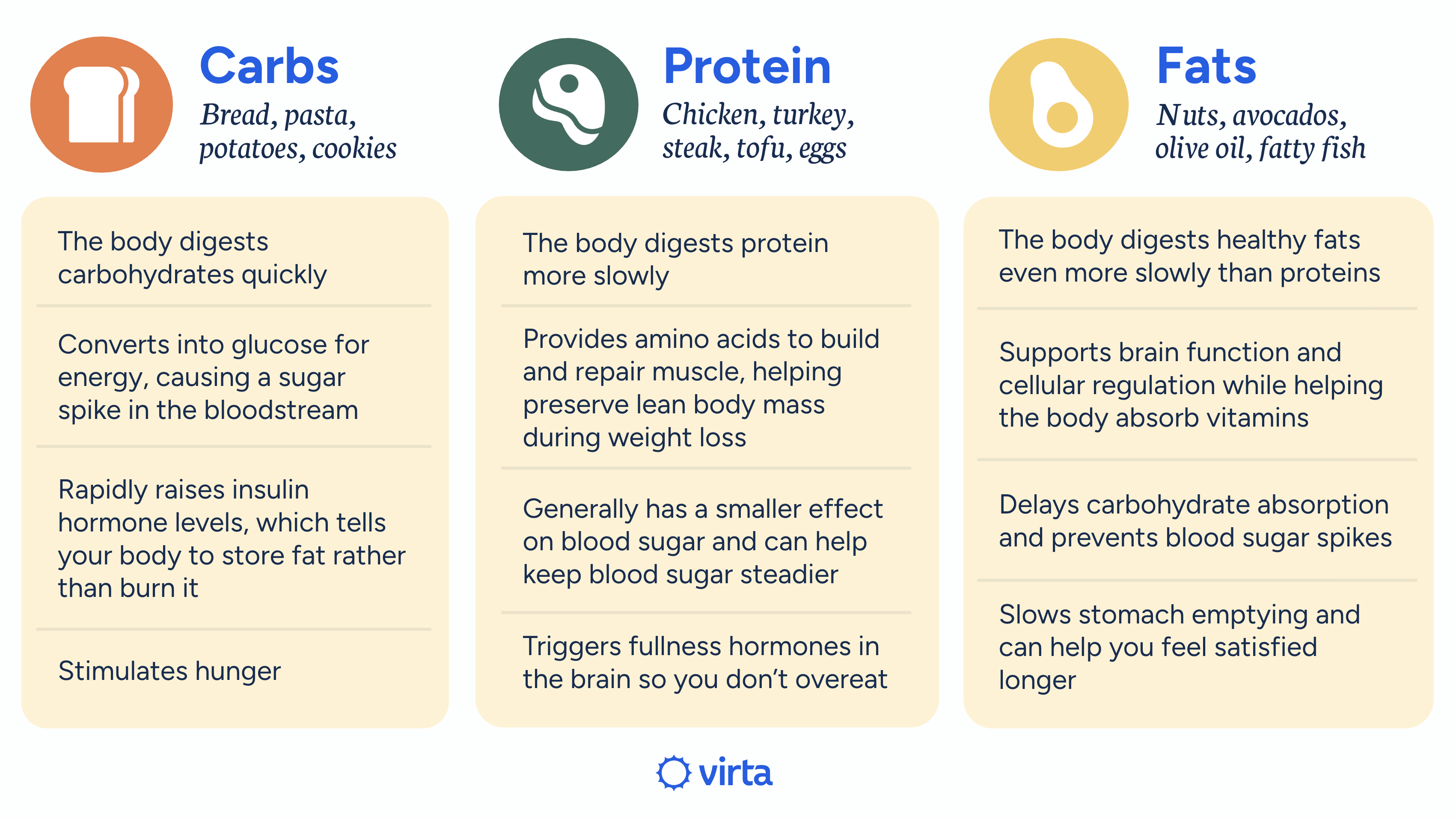
Other variables also come into play when thinking about nutrition as a lever to regulate the body’s metabolism, including body size, muscle mass, gender, and age. So there is no one-size-fits-all.
Personalized nutrition during and after GLP-1s
A recent study5 revealed that most people regain all their weight within two years after discontinuing GLP-1 medication. That’s why personalized nutrition guidance during and after GLP-1s plays an important role in managing members' metabolism and keeping weight off in the short and long term.
In fact, providing nutrition and behavior change coaching support while members are on GLP-1s sets them up for success during and long after GLP-1s. So it’s important to start nutrition support early in a member’s GLP-1 journey, and not wait until they stop the medication.
Personalized nutrition as a weight-loss alternative to GLP-1s
Moreover, studies show that nutrition is also a powerful strategy to regulate your members’ metabolism and promote weight loss as an alternative to GLP-1 medication.
- A Virta study demonstrated that Virta’s nutrition-first solution for weight loss delivers Rx-like outcomes, with members seeing an average 13% weight loss without Rx at 12 months.6
- Data demonstrated that Virta’s personalized, nutrition-based, medication-free weight loss pathway was associated with substantial weight loss while preserving lean mass, with lean mass changes comparing favorably with those reported in GLP-1 weight-loss trials.7,8
What behavioral or lifestyle support should be paired with GLP-1 medication?
For GLP-1s to be effective long-term, they should ideally be paired with nutritional and behavioral coaching, plus provider oversight to monitor dosing, mitigate side effects, ensure adherence, and provide support to drive sustainable lifestyle and nutrition changes.
As a Director of Coaching at Virta Health, I empathize with members as they embark on their weight loss journeys. Weight loss isn’t always a straight path, and medication can be part of that journey. Taking the medication as prescribed, while also simultaneously making nutrition and lifestyle changes, can be challenging for members.
But studies9 demonstrate that behavioral and lifestyle coaching can make a difference, serving as an important intervention for employers to offer alongside GLP-1 prescriptions.

No matter which weight-loss intervention someone chooses, lasting change requires behavior change. Even bariatric surgery requires people to adjust how and what they eat. GLP-1s change appetite, fullness, and often a person’s relationship with food, but medication alone does not teach someone how to navigate those changes. Studies⁹ demonstrate that personalized behavioral and lifestyle coaching can provide that support, making it an important intervention for employers to offer alongside GLP-1 prescriptions.
Key aspects of effective behavioral and lifestyle support
Here are the key aspects of effective behavioral and lifestyle support and provider oversight that employers can provide alongside, after GLP-1s, or even without GLP-1s:
- Educate members about what taking a GLP-1 may involve, including its potential benefits and risks, as well as non-medication alternatives, so they can make an informed decision with their healthcare provider.
- Safely titrate GLP-1 medication to the most effective dose while mitigating any side effects and ensuring adherence.
- Create personalized nutrition plans with continuous monitoring and adjustments to ensure optimal food intake that promotes weight loss while mitigating muscle loss and nutrient deficiencies.
- Create GLP-1 off-ramping plans including deprescription, long-term nutrition plans, and ongoing coaching support to keep the weight off.
- Apply behavior-change frameworks to ensure nutrition and lifestyle habits stick during, after, or without GLP-1s for sustained weight loss and lasting health outcomes.
How Virta Health helps employers drive sustainable weight loss outcomes with GLP-1s
Here at Virta Health, we help employers drive sustainable weight loss outcomes through personalized nutrition therapy and behavior change guided by clinically validated, AI-supported metabolic insights–delivering measurable health outcomes and sustained cost reductions.
Virta for Weight Loss+ delivers wraparound support to optimize outcomes before, during, and after GLP-1s.
Key highlights include:
- Nutrition therapy that improves metabolic health. Virta helps members lower carbohydrate intake based on each member’s preferences, goals, and metabolic response, while emphasizing protein and healthy fats. This approach reduces hunger cravings while improving metabolic function, creating the conditions for weight loss with or without GLP-1s.
- Behavior change guided by metabolic insight. Virta’s app, AI tools, ketone tracking, coaching, and care team create a feedback loop that guides decision-making and turns nutrition from guesswork into guided, personalized action.
- Safe prescribing and medication management. Virta Health works alongside the employer's preferred access and fulfillment strategy by integrating with PBMs and alternative funding solutions, such as Cash Pay direct-to-consumer models, to ensure safe, clinically monitored, and cost-effective GLP-1 prescriptions.
Because weight loss and behavior change are connected to metabolic feedback and clinical support, members build sustainable habits. As a result, Virta helps employers lower prescription drug and long-term metabolic health costs by improving their members’ underlying metabolic conditions.
Related resources
What 10+ years of real-world GLP-1 prescribing experience uncovered [Webinar replay]
Virta Health published study on off-ramp GLP-1s sustained weight loss
This blog is intended for informational purposes only and is not meant to be a substitute for professional medical advice, diagnosis, or treatment. Always seek the advice of your physician or other qualified health provider with any questions you may have regarding a medical condition or any advice relating to your health. View full disclaimer
Are you living with type 2 diabetes, prediabetes, or unwanted weight?

- Christensen AS, et al. Dietary intake by patients taking GLP-1 and dual GIP/GLP-1 receptor agonists: A narrative review and discussion of research needs. Obesity Pillars. 2024;11:100121. doi:10.1016/j.obpill.2024.100121
- Urbina J, et al. Micronutrient and Nutritional Deficiencies Associated With GLP-1 Receptor Agonist Therapy: A Narrative Review. Clin Obes. 2026 Feb;16(1):e70070. doi: 10.1111/cob.70070. PMID: 41549912.
- Neeland IJ et al. Changes in lean body mass with glucagon-like peptide-1-based therapies and mitigation strategies. Diabetes Obes Metab. 2024 Sep;26 Suppl 4:16-27. doi: 10.1111/dom.15728. Epub 2024 Jun 27. PMID: 38937282.
- Theodorakis N et al. Beyond Calories: Individual Metabolic and Hormonal Adaptations Driving Variability in Weight Management-A State-of-the-Art Narrative Review. Int J Mol Sci. 2024 Dec 15;25(24):13438. doi: 10.3390/ijms252413438. PMID: 39769203; PMCID: PMC11676201.
- West, Sam et al. Weight regain after cessation of medication for weight management: systematic review and meta-analysis. BMJ 2026; 392 doi: https://doi.org/10.1136/bmj-2025-085304
- McKenzie AL, Athinarayanan SJ, McCue JJ, et al. Type 2 Diabetes Prevention Focused on Normalization of Glycemia: A Two-Year Pilot Study.Nutrients. 2021; 13(3):749. doi: 10.3390/nu13030749).
- Wilding JPH, Batterham RL, Calanna S, et al. Once-Weekly Semaglutide in Adults with Overweight or Obesity. N Engl J Med. 2021;384(11):989-1002. doi:10.1056/NEJMoa2032183.
- Athinarayanan et al. “Long-Term Effects of a Novel Continuous Remote Care Intervention Including Nutritional Ketosis for the Management of Type 2 Diabetes: A 2-Year Non-randomized Clinical Trial.” Frontiers in Endocrinology vol. 10 348. 5 Jun. 2019.
- Sforzo GA et al. Health and Well-Being Coaching Adjuvant to GLP-1 Induced Weight Loss. Am J Lifestyle Med. 2024 Nov 19;19(4):652-660. doi: 10.1177/15598276241302273. PMID: 39575304; PMCID: PMC11577329.