How Diabetes Inspires the Prince of Accessibility

Key Takeaways
- Kevin Prince is a Christchurch-based accessibility consultant who improves websites and apps for people with disabilities and chronic health conditions.
- His own type 2 diabetes and fatty liver syndrome give him a personal understanding of how poor accessibility affects daily life, especially for people with vision challenges.
- Prince helped address accessibility problems in New Zealand’s COVID tracing app, including barriers faced by blind users trying to find and scan QR codes.
- Virta Health supports people with type 2 diabetes through medically supervised lifestyle change and 1:1 virtual coaching, helping them regain control of their health and reduce the burden of the condition.
Once afraid of losing his vision because of Type 2 diabetes, accessibility consultant Kevin Prince makes the world a better place for those with disabilities.
Picture the scene: it’s pouring with rain, and you’ve just boarded the bus. It’s been a long day, but you’re not done yet: you need to grab a few things from the supermarket on your way home. Finding a seat, you pull out your phone and navigate to your shopping app. Through fogged-up glasses, you squint at the shapes and options on the screen, finger hovering. What was an easily navigable interface from your desk earlier suddenly feels impossible in the face of poor lighting and a lurching bus.
Enter: Kevin Prince. Residing in Christchurch, New Zealand, the accessibility consultant specializes in improving websites and apps’ usability. Kevin’s own conditions – Type 2 diabetes and Fatty Liver Syndrome (non alcoholic steatohepatitis) – give him a greater understanding of what is needed to make the world an easier place for people living with chronic health conditions.
Helping Others Through A Personal Lens
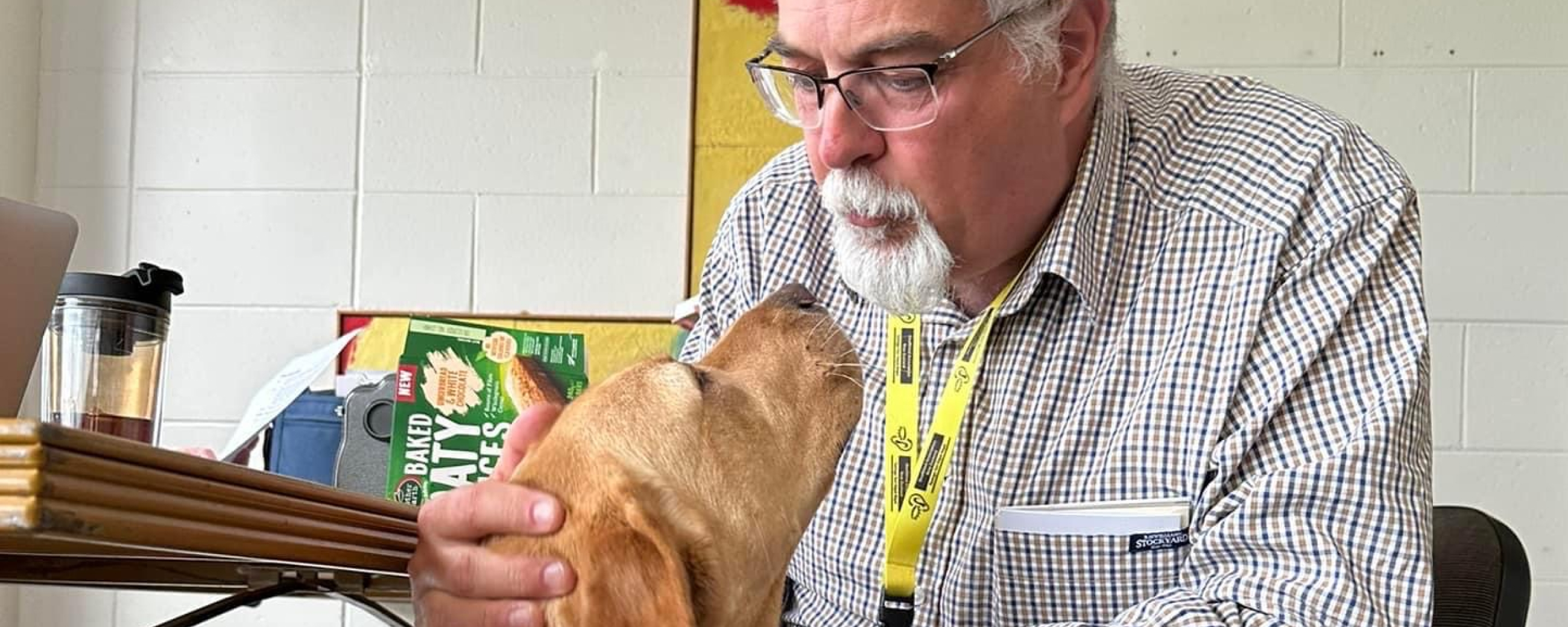
With one in four having a declared impairment, accessibility is an important topic, Kevin says. And that statistic doesn’t touch temporary impairments like injuries. “Or being unable to use a mouse because you’re holding your child. Or in my case, a dog,” he says.
As a contractor, Kevin splits his time between two roles. Consulting for a large corporation, he’s part of a design team working on product accessibility. He also does freelance work, consulting on how to improve the usability of websites and apps for people with conditions and disabilities.
One project Kevin recently tackled was New Zealand’s official COVID tracing app. The app allowed New Zealand citizens to check in to locations through QR codes posted in public places; if anyone who shared that space with them later tested positive, everyone who checked in at the same time would get an alert.
.jpeg)
New Zealand’s response to the COVID pandemic has been widely hailed as one of the most successful in the world. However, after the official COVID tracing app was released in May 2020, the country’s health ministry came under fire from those in the disability community such as the blind who had trouble locating and scanning the QR codes. Kevin was brought in to address that criticism.
As president of the Deafblind Association of New Zealand, accessibility issues around impaired vision are at the top of Kevin’s mind. Though not blind himself, the combination of type 2 diabetes and fatty liver disease puts Kevin at increased risk of vision impairment, which is why he works hard to make sure that websites and apps are accessible to the blind.
“I think we are seeing some positive change [in regards to accessibility for blind users],” he says. “If you ask users in the field, they can't see it. It's incremental, but it’s definitely happening.”
A Life With Diabetes In The Background
These days, Kevin’s Type 2 diabetes is well-managed, though not reversed. For a while, Kevin ran a luxury cat hotel for up to 80 cats at a time. It was a fulfilling, but full-on job, as was the 9-5 role he took on after he sold the hotel, and he found his work was affecting his health. It wasn’t until the COVID pandemic hit that he was able to slow down, take a breath, and take stock. He left his full time gig and started working for himself, a pace of life that agrees with him.
“[Now] it’s well controlled: diabetes is a background to my life rather than being a focal point,” Kevin says.
"It’s well controlled: diabetes is a background to my life rather than being a focal point."
The possibility of losing his eyesight has also receded, and Kevin now sees a specialist once every 18 months instead of twice a year, as he once did. But Kevin isn’t afraid of losing his eyesight.
“From all the work I have done, I know [becoming blind] changes your life, but it's not the end of your life, even if it might feel that way,” he says. “But I’m not going to volunteer for it. Which means looking after my diabetes.”
At Virta Health, we know living with a chronic health condition like diabetes isn’t easy. If you are diagnosed with type 2 diabetes and want to live a healthier lifestyle, Virta Health may be able to help. By making healthy lifestyle changes in a medical setting with supportive resources like 1:1 virtual coaching, you can regain control of your health and feel like yourself again. See if you’re eligible for Virta Health here.
This blog is intended for informational purposes only and is not meant to be a substitute for professional medical advice, diagnosis, or treatment. Always seek the advice of your physician or other qualified health provider with any questions you may have regarding a medical condition or any advice relating to your health. View full disclaimer
Are you living with type 2 diabetes, prediabetes, or unwanted weight?